Contact details:
Different behavioural strengths (or Team Roles) can be used at different times to keep projects on track. For more information, see Belbin project and teams.
By Victoria Brown, Head of Research & Development
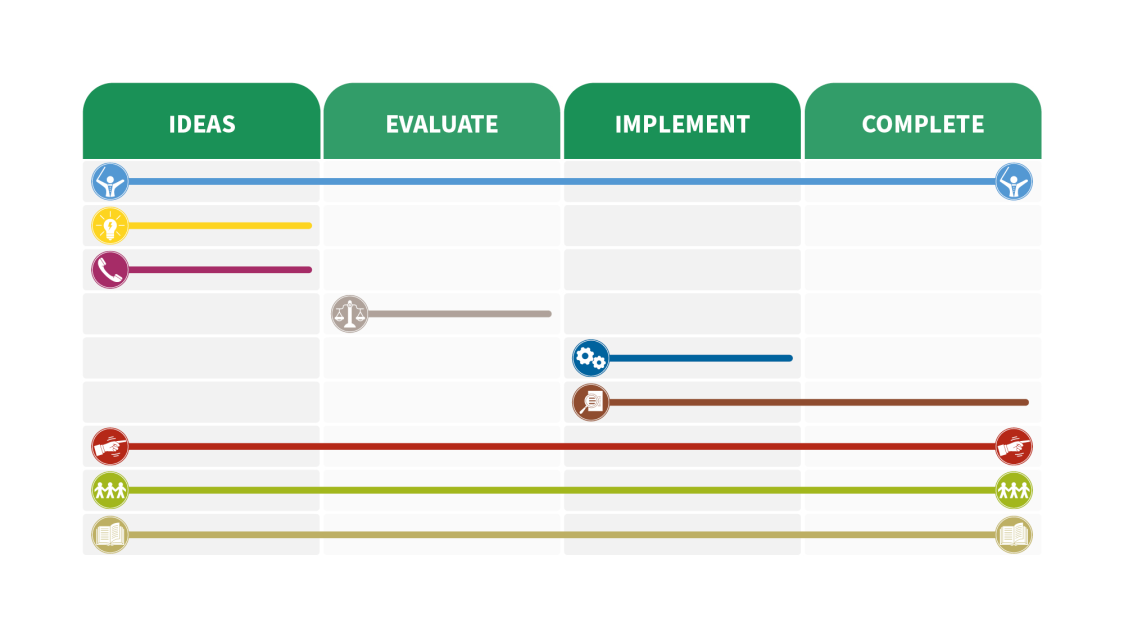
By linking specific contributions to stages of the project, whether evaluating ideas, building consensus or ensuring quality, teams can deploy the right people at the right time. This reduces unnecessary meetings, avoids duplication, and keeps momentum.
For project leaders, the implication is clear: maintaining delivery is not just about planning the work, but about understanding how people work together at each stage. A practical, behaviour-focused approach enables teams to adjust in real time, and helps keep projects on track from start to finish.
Project teams in supply chains present a particular challenge: they are often assembled quickly, expected to build rapport fast, and deliver against fixed schedules. it can be tempting to focus purely on tasks and timelines, but overlooking the "people elements" only leads to problems later. Even if the importance of teamwork is well understood, finding the time to address "people issues" can still be a challenge.
The solution might be an awayday, with a personality test thrown in - an intervention that may improve morale in the short term, but lacks practical impact. Meanwhile, unresolved issues - misalignment, poor communication, and friction between individuals or teams - can continue to threaten timelines. Teams can become stuck in early-stage discussions, unable to move forward or rush into delivery without sufficient consideration or planning. in supply chain projects, these imbalances can quickly translate into delays, inefficiencies, and increased operational risk.
At Belbin, the Team Role company, we take a different approach, aligning behavioural strengths to different phases of the work, and focusing on the data that counts: observable behaviour in context.
Founded by pioneering researcher Dr Meredith Belbin, in Cambridge UK, Belbin has been studying and working with teams for more than 40 years to help organisations improve team performance through evidence-based behavioural insights. Belbin Team Role theory has come to be regarded as a cornerstone of management consultancy and HR practice. Today, Belbin operates worldwide, enabling teams all over the globe to unlock their value and deliver real business results.
instead of labelling people with personality types, Belbin helps teams understand which behaviours are required and who can best contribute in real project conditions.