

issue, it returns to its starting point and reports the exact location of the problem. This targeted approach allows engineers to address specific points along the 27-kilometre collider, without disassembling large sections of pipe.
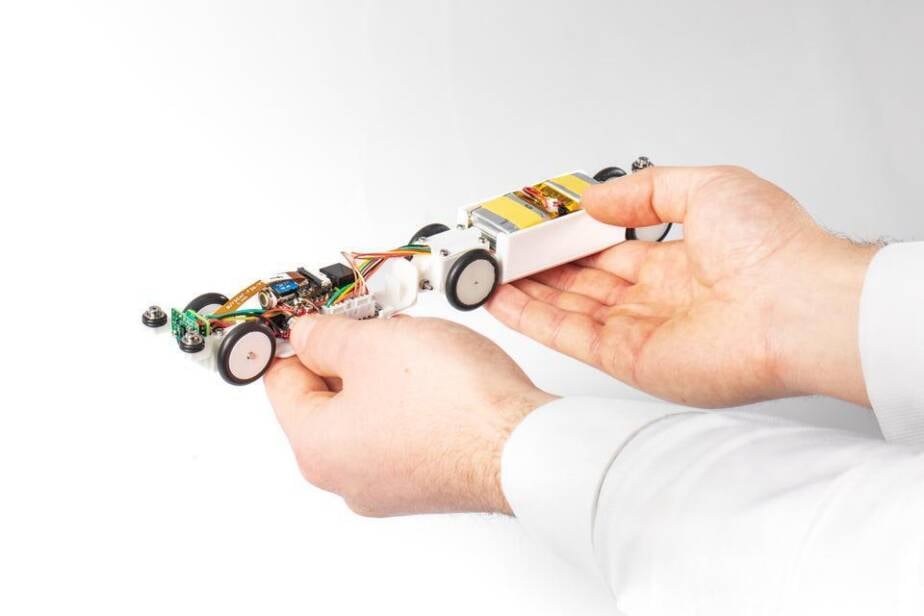
UKAEA and CERN have been awarded as ‘Highly Commended’ for The Engineer’s ‘Collaborate to Innovate (C2I) Award’ for the joint development of a small autonomous robot, named ‘PipelNEER’.
The PipelNEER, a first-of-its-kind robot, is just 3.7cm-wide, and was designed to travel autonomously through long narrow pipes called the beamline around the Large Hadron Collider.
As the robot moves through the Large Hadron Collider, it captures detailed images of each plug-in module and uses artificial intelligence to detect any abnormalities. If the robot detects an
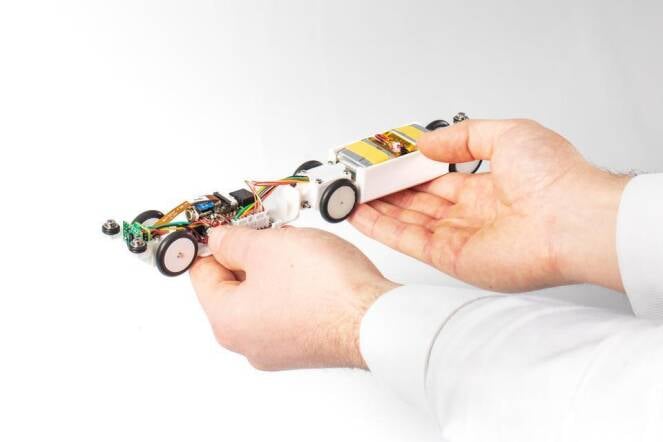
UKAEA and CERN have been awarded as ‘Highly Commended’ for The Engineer’s ‘Collaborate to Innovate (C2I) Award’ for the joint development of a small autonomous robot, named ‘PipelNEER’.
The PipelNEER, a first-of-its-kind robot, is just 3.7cm-wide, and was designed to travel autonomously through long narrow pipes called the beamline around the Large Hadron Collider.
As the robot moves through the Large Hadron Collider, it captures detailed images of each plug-in module and uses artificial intelligence to detect any abnormalities. If the robot detects an